
Understanding Fire Alarm Reporting & Computer Aided Dispatch
The Fire Marshall Let the Building Burn. They Didn't Have to.
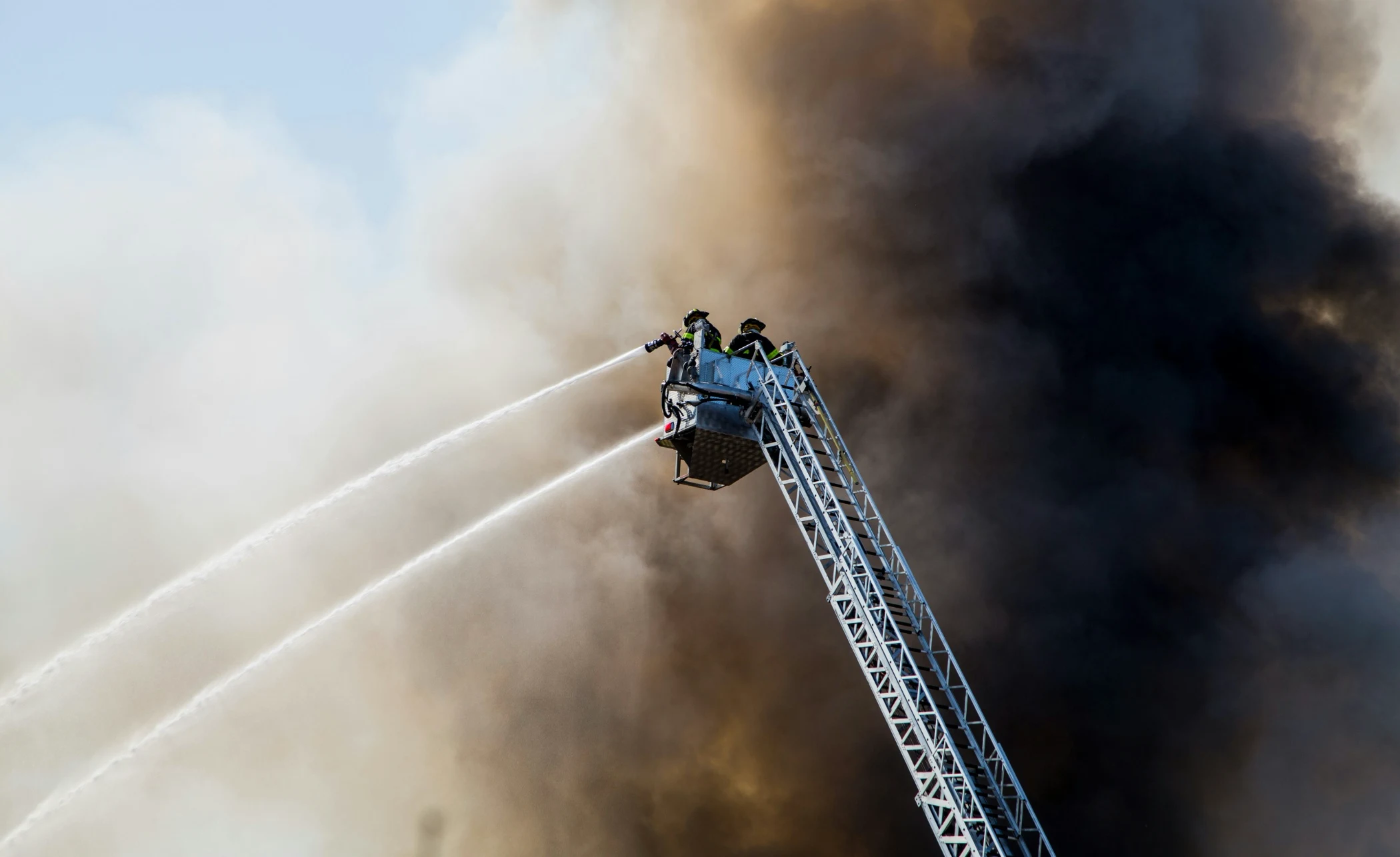
In 2023, a mid-sized military installation experienced a catastrophic structural fire that destroyed a critical logistics warehouse. The fire alarm activated — but the alert was routed through an outdated analog reporting chain. By the time the signal reached the fire station, was manually logged, and a crew was dispatched, over 22 minutes had gone by.
The building was fully engulfed. Millions of dollars in equipment were lost. The after-action report concluded the same thing everyone already knew: the system failed before the fire ever started.
This isn't an isolated incident. Across DoD installations, allied forward operating bases, and expeditionary environments, legacy fire alarm reporting systems continue to cost lives, equipment, and mission readiness. The solution already exists — and the transition is already underway.
The Problem with Analog Fire Alarm Reporting
Traditional fire alarm reporting systems were designed for a simpler era. A detector activates, a signal travels through hardwired circuits to a central panel, and a human operator interprets the alert, picks up a phone or radio, and dispatches a response team. Every step in that chain introduces delay, human error, and single points of failure.
Common failure points in legacy systems include:
- Signal degradation over aging copper wiring and outdated panels
- Manual interpretation of alarm codes, requiring trained operators on-site 24/7
- Radio or phone-based dispatch, which depends on operator availability and clear communication
- No geospatial context — responders receive an address, not a precise location within a facility
- Zero integration with other base defense or emergency management systems
- Limited scalability — adding coverage to new structures requires physical infrastructure buildout
For a garrison environment with dedicated fire stations and robust infrastructure, these limitations are manageable. For expeditionary, contingency, or austere environments — they are mission-critical vulnerabilities.
The Shift: IoT-Enabled Fire Alarm Systems and Computer Aided Dispatch
The defense and emergency management sectors are now transitioning from analog fire alarm reporting to Internet of Things (IoT) enabled systems integrated with Computer Aided Dispatch (CAD) platforms. This shift represents a fundamental change in how fire emergencies are detected, reported, and responded to.
What Is Computer Aided Dispatch (CAD)?
Computer Aided Dispatch is a software platform that automates the process of identifying, prioritizing, and dispatching emergency resources. Modern CAD systems ingest data from multiple sources — fire alarm panels, IoT sensors, surveillance feeds, access control systems — and use rules-based logic or AI-assisted decision-making to recommend or execute dispatch actions in real time.
Key capabilities of modern CAD systems include:
- Automated alarm ingestion — fire alarm signals are received digitally and processed instantly, eliminating manual interpretation
- Geospatial mapping — responders see the exact building, floor, and zone of the alarm on a digital map
- Resource tracking — CAD knows which units are available, their location, and their capability
- Prioritization logic — multiple simultaneous alarms are triaged automatically based on threat level, occupancy, and asset value
- Integrated communications — dispatch instructions are pushed directly to responder mobile devices, vehicle terminals, and station alerting systems
- Data logging and reporting — every event is timestamped and recorded for after-action review, compliance, and trend analysis
The Role of IoT in Modern Fire Alarm Reporting
IoT-enabled fire alarm systems replace or augment traditional hardwired panels with networked sensors that communicate over IP, cellular, or mesh radio networks. These sensors do more than detect smoke or heat — they report environmental conditions, system health, and precise location data in real time.
IoT fire alarm capabilities include:
- Wireless smoke, heat, and gas detection with self-diagnostics and remote monitoring
- Real-time environmental telemetry — temperature, humidity, air quality — providing early warning before a detector threshold is reached
- Mesh networking — sensors communicate with each other, creating redundant signal paths that eliminate single points of failure
- Cloud or edge connectivity — alarm data is transmitted to CAD platforms, building management systems, and command centers simultaneously
- Rapid deployment — wireless sensors can be installed in expeditionary or temporary structures without running conduit or cable
- Scalability — adding coverage is as simple as placing additional sensors on the network
Why This Matters for Defense and Expeditionary Operations
The transition from analog fire alarm reporting to IoT-integrated CAD is not just a technology upgrade. It is a force protection imperative.
Speed
In the scenario described above, 22 minutes elapsed between alarm activation and crew arrival. A modern CAD system decreases that timeline dramatically. The alarm signal is received, validated, and dispatched in seconds — not minutes. For a structure fire, the difference between a 3-minute and a 22-minute response can be the difference between a contained incident and a total loss.
Situational Awareness
Legacy systems tell you that an alarm activated. IoT-integrated CAD tells you where the alarm activated, what conditions are present, which assets and personnel are in the affected area, and what resources are available to respond. Commanders and fire chiefs make better decisions with better information.
Interoperability
Modern CAD platforms integrate with other base defense and emergency management systems — intrusion detection, access control, mass notification, CBRNE sensors, and surveillance. A fire alarm in a restricted area can automatically trigger lockdown protocols, notify security forces, and pull camera feeds — all before a firefighter steps on the truck.
Expeditionary Readiness
Forward operating bases, contingency locations, and temporary training facilities often lack the infrastructure for traditional hardwired fire alarm systems. IoT sensors and cloud-connected CAD platforms can be deployed rapidly, providing the same level of fire alarm reporting and dispatch capability as a permanent installation — in a fraction of the time and cost.
Compliance and Accountability
DoD installations are subject to UFC (Unified Facilities Criteria) and NFPA (National Fire Protection Association) standards for fire protection. Integrated CAD systems provide automated documentation, inspection tracking, and compliance reporting that legacy systems simply cannot match.
The Cost of Inaction
The warehouse fire described at the beginning of this article resulted in an estimated $4.7 million in direct equipment losses. The indirect costs — mission disruption, investigation, temporary facility standup, and replacement procurement — exceeded $12 million. The root cause was not a failure of the fire alarm itself. The detector worked. The panel worked. The system failed in the space between detection and response — the space that CAD eliminates.
Every installation, every forward operating base, and every expeditionary site that continues to rely on analog fire alarm reporting and manual dispatch is accepting this risk. The technology to eliminate it is proven, available, and deployable today.
How ATTAIN Supports the Transition
ATTAIN specializes in the proactive planning and rapid procurement of Fire and Emergency Services (FES) solutions — including fire alarm panels, suppression systems, CAD platforms, and other IoT sensor networks that connect them. As a value chain management organization, ATTAIN doesn't just sell hardware. We manage the end-to-end process of identifying your requirements, engineering the solutions, and delivering a turnkey capability to your team.
ATTAIN's Fire and Emergency Services capabilities include:
- Fire alarm panels and suppression systems compliant with UFC and NFPA standards
- IoT sensor networks for smoke, heat, gas, and environmental monitoring
- CAD platform integration with existing base defense and emergency management infrastructure
- Expeditionary fire protection packages designed for rapid deployment to austere environments
- Sustainment and maintenance support to keep systems operational throughout their lifecycle
- Video Surveillance Systems (VSS) integrated with CAD platforms for real-time incident verification and response coordination
The Fire Marshall didn't let the building burn on purpose. The system let the building burn by design. ATTAIN can help you redesign the system — so the next alarm gets the response it demands.